Weight fills a dumpster long before volume does. Here's how to match the job to the right size the first time, with a full comparison of every size we run in Bradenton.
8 min readUpdated 2026-02-02By BDN Bros Dumpster Rental Bradenton
Why Sizing a Dumpster Isn't Guesswork
Bradenton sits on the south bank of the Manatee River, a compact 14.44-square-mile city roughly midway between Tampa and Sarasota along US 41 — and inside that footprint you'll find everything from small 1920s bungalows near downtown to sprawling new-construction lots pushing east toward Lakewood Ranch. The right dumpster size depends far more on what's actually in the pile than on how big the job "feels." A single-room gut job with drywall and tile can fill a 10 yard can before you'd expect, because tile and drywall are heavy. A whole-house furniture cleanout can look enormous and still ride comfortably in a 20 yard, because furniture and boxes are mostly air.
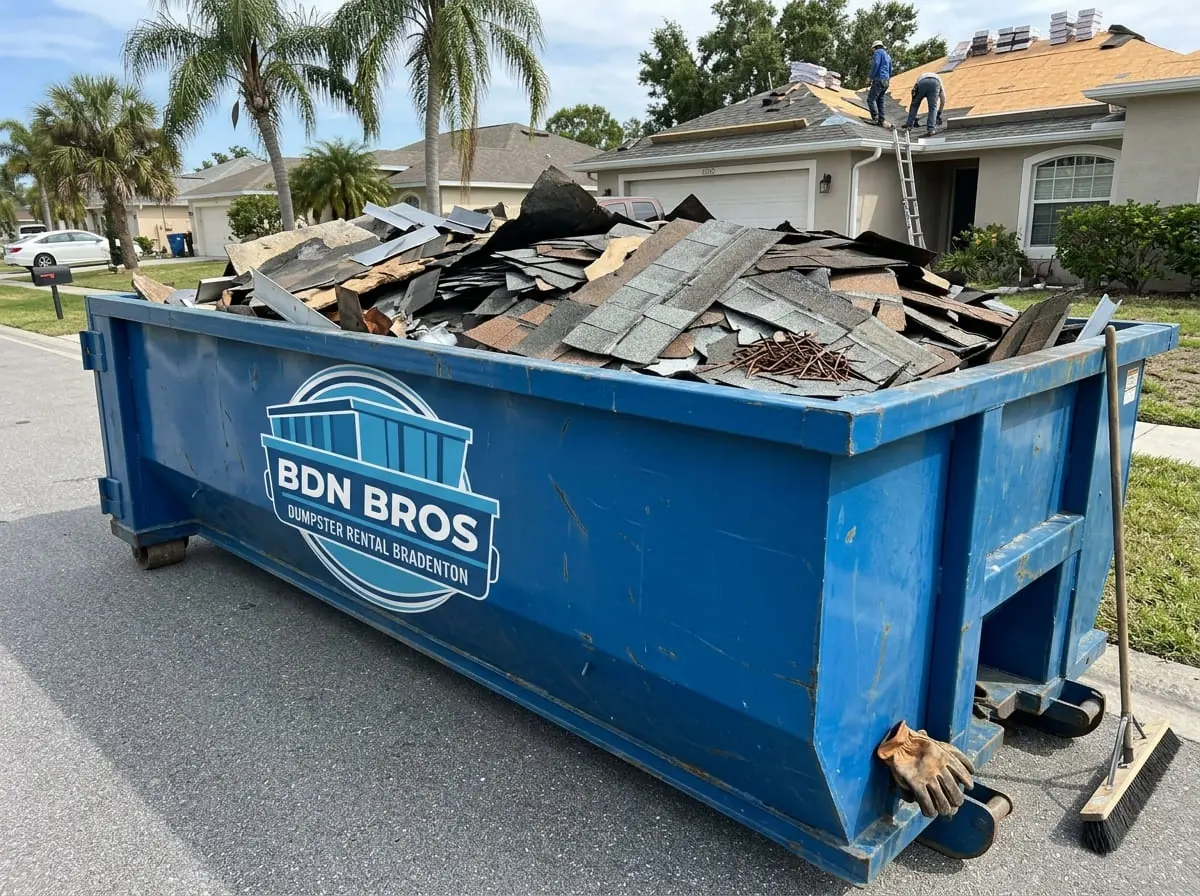
The rule of thumb our drivers use every day: figure out whether your job is heavy and dense (concrete, roofing shingles, tile, dirt) or bulky and light (furniture, cabinets, yard debris, drywall sheets), because those two categories fill a container in very different ways. A 20 yard loaded with roofing material will hit its weight allowance long before it looks full. The same 20 yard loaded with a garage's worth of boxes and old furniture might never come close to the weight line but fill to the top rail instead.
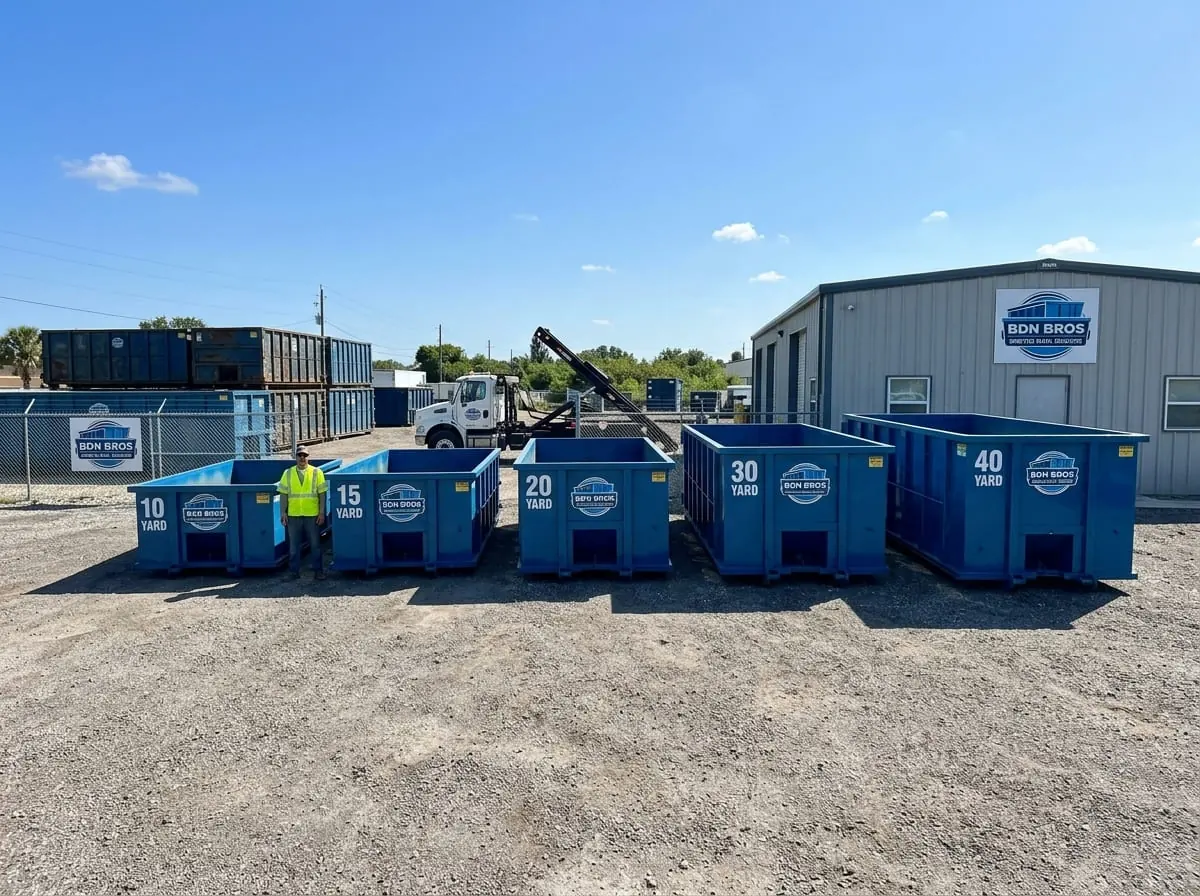
Bradenton Roll-Off Sizes at a Glance
Roll-off dumpster sizes available in Bradenton, FL and across Manatee County
Large commercial fit-outs, industrial clear-outs, major renovations and high-volume light debris.
Every size above ships with a stated weight allowance included in one flat price — no surprise per-ton math after the fact, and no dollar figure we're going to throw at you before we know what you're actually clearing. Call and describe the job and we'll tell you straight whether the size you're picturing is the right one.
Matching the Job to the Size
For most single-room remodels, a bathroom or kitchen tear-out, or a garage and lanai cleanout, a 10 or 15 yard is usually plenty — enough for cabinets, flooring, drywall and the odds and ends that come with a mid-size renovation without paying for capacity you won't use. Whole-home cleanouts, larger flooring or siding jobs, and most roof tear-offs move up to a 20 yard, which is also the size with the deepest local track record here: it's the one size from BDN Bros' old site that historically showed up in search results for Bradenton dumpster rental, long before the site went offline. Full gut renovations, new construction, and estate clearances call for a 30 or 40 yard — the sizes that make sense on a Lakewood Ranch new-build lot or a multi-week estate cleanout where debris keeps coming for days.
When to Size Up
Three situations almost always mean going a size bigger than your first instinct: roofing jobs with more than a couple layers of old shingles (shingles are dense and heavy), any job involving concrete, brick or masonry (these fill the weight allowance almost instantly regardless of the container's physical size), and multi-phase renovations where debris will accumulate over more than a week or two. In every one of those cases, paying for a slightly larger container up front is cheaper and far less hassle than needing a second delivery mid-job or getting hit with an overage because the load ran heavier than expected.
Getting It Right the First Time
Bradenton's population has grown roughly 4% since the 2020 Census, and Manatee County as a whole has grown even faster — which means more renovations, more downsizing, and more new construction moving through driveways and job sites across the county every month. We size hundreds of these jobs a year out of our 2027 Manatee Ave yard, and the honest answer is usually not "go big just in case." It's a five-minute phone call where you describe what's coming out of the house or the site, and we tell you the smallest size that actually gets the job done in one haul.
BDN Bros Dumpster Rental Bradenton
Written by the team that coordinates every delivery out of our yard on 2027 Manatee Ave in
Bradenton. We haul roll-offs across Manatee County and the Manatee County Gulf Coast every week. Questions about
your own job? Call (941) 269-1202.
Talk to a real person
Ready to book a container in Bradenton?
Call and describe the job. Flat price, stated tonnage, and a delivery time on the same call.
What's the most popular dumpster size in Bradenton?
The 20 yard is the size with the deepest local search history behind it and the one that fits the widest range of Bradenton jobs — whole-home cleanouts, flooring and siding projects, and larger roof tear-offs. It's a reasonable starting point if you're not sure, but call and describe the job before you commit.
Does weight or volume usually fill the dumpster first?
For dense material like concrete, tile, roofing shingles and dirt, weight fills the container long before it looks full. For bulky, lighter material like furniture and yard debris, volume runs out first. Tell us which kind of job you have and we'll size accordingly.
Can I upgrade to a bigger size mid-job if I run short?
Yes — call us and we'll work a swap or an upsize into the schedule. It's far more common on multi-week renovation and estate-cleanout jobs than you'd think, and it's a normal part of how we plan deliveries.
Do you charge extra if the dumpster comes in under the weight allowance?
No. Every size ships with a stated weight allowance built into one flat price, and we don't charge more if you come in under it. We'll tell you plainly if your job is likely to run over before the truck ever leaves the yard.
Manatee County requires a Right-of-Way Use Permit for certain improvements on public property — but whether that extends to a roll-off dumpster at the curb isn't spelled out. Here's what to check before you place one.
Manatee County's Lena Road Landfill handles disposal for the whole county — here's where it is, when it's open, and what to expect if you ever need to go yourself.
Florida has a specific state rule governing how construction and demolition debris gets processed and disposed of. Here's what it actually says, in plain language.