Renovation Debris on Anna Maria Island: What Homeowners Should Know
Anna Maria Island is really three separate cities, each incorporated decades apart with its own character. Renovation and cleanup work looks a little different in each one.
ReadBradenton, FL guide
Manatee County has weathered four named storms in two years. Here's what the county's own debris removal record shows — and what it means for cleanup on private property.
Manatee County is a Gulf Coast, storm-surge-vulnerable county, and the 2023–2024 hurricane seasons hit it hard. Hurricane Idalia in August 2023 triggered mandatory evacuations and a Bradenton declaration of a state of emergency as it approached. Tropical Storm Debby, in August 2024, brought record rainfall and flooding that closed roads across the Bradenton and Sarasota area — local reporting later examined whether releases from Lake Manatee contributed to the flooding, and officials said the releases were not the primary cause. Then, within about two weeks of each other in late September and October 2024, Hurricanes Helene and Milton both hit the region, producing the largest storm-debris volume the county has documented in recent memory.
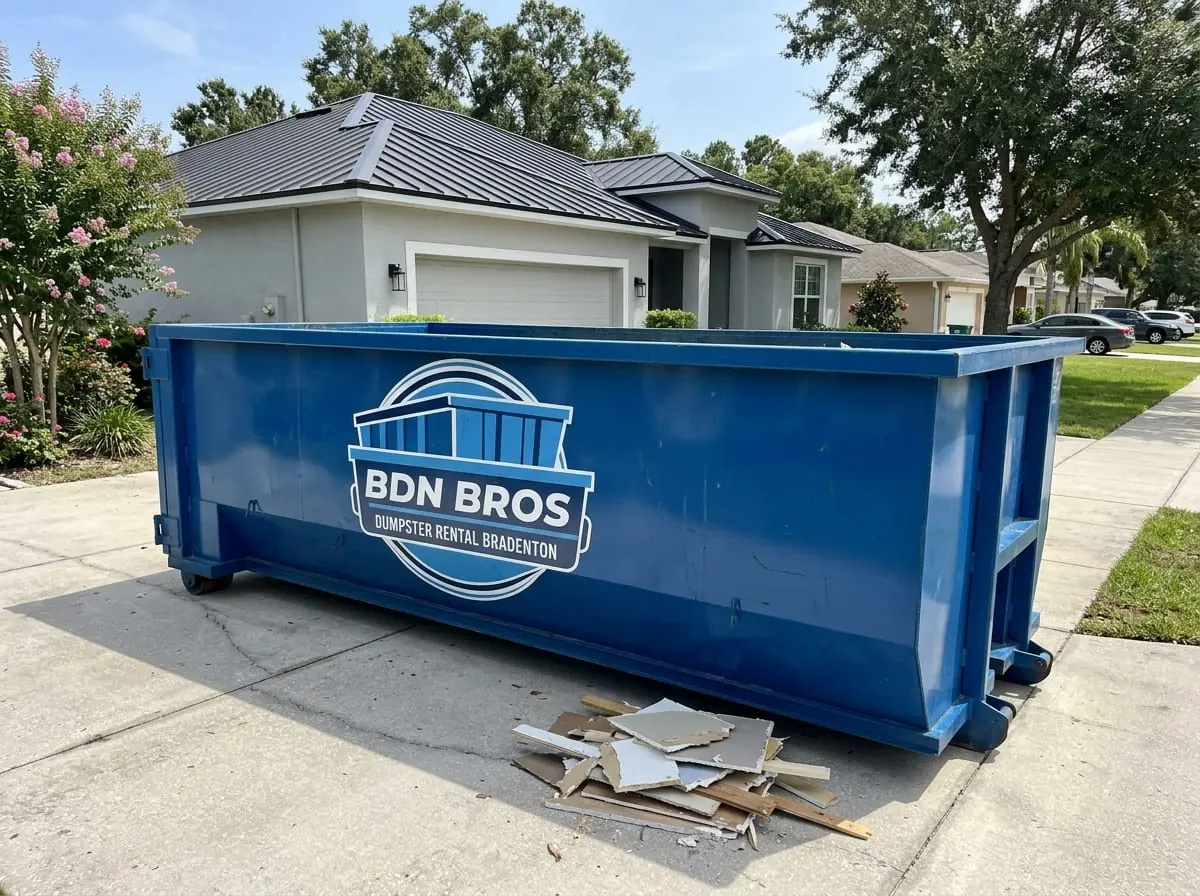
This is the single most important thing for a homeowner to understand: county debris crews only clear material piled in the public right-of-way — the curb strip in front of a property — not debris still sitting on private property. If a fence blew down in your backyard, a shed collapsed, or interior flood debris needs to come out of a house, county curbside collection was never going to reach it. That debris has to be hauled by the property owner, which is exactly the gap a rented roll-off dumpster fills for storm cleanup that never touches the public right-of-way at all.
When the county does collect from the right-of-way, it asks residents to sort curbside storm debris into three categories: vegetative debris (tree limbs and plant material), construction and demolition debris (building materials, fencing, furniture, mattresses), and appliances or "white goods." Debris should be piled — not bagged — at least three feet from structures, mailboxes, vehicles, and power equipment, and vegetative material has to be kept separate from construction material rather than mixed in one pile.
The scale of the 2024 cleanup is worth knowing, if only to understand how seriously the county treats storm debris. By late October 2024, the county reported it had collected more than 400,000 cubic yards and 7,700-plus truckloads of hurricane debris since October 14 — with roughly 80 trucks working sunrise to sunset, seven days a week. The pace of that effort is visible in the county's own progress numbers: by October 22, the running tally stood at 227,945 cubic yards, and on October 25 alone crews removed roughly 42,000 cubic yards in a single day. The county set up eight temporary debris disposal sites around the county, including two public self-unload sites, and brought in out-of-county haulers to accelerate the work. FEMA agreed to reimburse the county's debris collection at 100% for 90 days following Hurricane Milton, compared to the standard 75% rate, and the county's Director of Utilities, Patrick Shea, set a goal of clearing the bulk of the debris within that 90-day window — with some estimates suggesting total removal could exceed 3 million cubic yards if volume held at pace. The county later reported it would recover only a fraction of its total hurricane recovery costs from state and federal sources. On Anna Maria Island, Hurricane Milton re-damaged the historic Anna Maria City Pier, which had only recently reopened in April 2020 after earlier repairs from Hurricane Irma.
One practical lesson sits underneath all of this: before any debris moves — whether it's headed to the curb for county pickup or into a rented dumpster from private property — photograph the damage first. Insurance claims and any FEMA-related assistance both depend on documentation of what was damaged and when, and once debris is hauled away that evidence is gone. It costs nothing and takes a few minutes with a phone camera, and it's the single most common thing homeowners wish they'd done more thoroughly after the fact.
Given that track record, a practical Bradenton-area storm-season checklist looks like this: document damage with photos before you touch anything, for insurance and any FEMA-related claims; separate vegetative debris from construction debris from the start rather than mixing piles; understand that anything on private property — not the curb — is on you to clear, which usually means a dumpster rather than waiting on county pickup; and if you're doing post-storm repairs that generate more debris than curbside collection can handle, book a roll-off early, since demand spikes hard in the days after a storm passes. We don't run hurricane-response operations and won't claim we do — but a rented container for the private-property side of a storm cleanup is exactly the kind of job we handle year-round.
It's worth planning ahead of the season, too, not just reacting after a storm has already passed through. Knowing which hauler you'll call, keeping a rough idea of what size container your property would need for a worst-case cleanup, and understanding upfront that county crews stop at the curb are all things far easier to sort out calmly in May than in a scramble the week after a named storm makes landfall. Manatee County's recent run of Idalia, Debby, Helene and Milton within roughly two years is reason enough to treat that kind of preparation as routine rather than optional here.
Talk to a real person
Call and describe the job. Flat price, stated tonnage, and a delivery time on the same call.
Mon–Sat 7:00am – 6:00pm
From this guide
No — county crews only clear debris piled in the public right-of-way, not debris still on private property. Backyard, interior, or structure debris has to be hauled separately, typically with a rented dumpster.
Into three separate piles: vegetative (limbs, plant material), construction and demolition (building materials, fencing, furniture, mattresses), and appliances/white goods — piled, not bagged, at least three feet from structures, mailboxes, vehicles and power equipment.
No. The extended hours and fee waiver for county residents were a temporary emergency response specific to the Helene/Milton 2024 debris surge, not a standing policy. Standard hours and terms apply outside a declared emergency.
No — we're a local roll-off rental company serving Bradenton and Manatee County homeowners and contractors, not a county-contracted disaster response operation. What we do well is get a container to your property quickly for the private-property cleanup work the county doesn't cover.
Keep reading
Anna Maria Island is really three separate cities, each incorporated decades apart with its own character. Renovation and cleanup work looks a little different in each one.
ReadBradenton's name and spelling changed more than once on the way to becoming the city it is today. Here's the history behind an older Bradenton home, and what renovating one usually involves.
ReadNot everything belongs in a rented roll-off, and sorting the right way from the start saves a headache later. Here's the plain version of what goes where.
Read